Estate agents who are members of the Society of Chartered Surveyors Ireland (SCSI) expect national property prices to increase by an average of 6% over the next twelve months. This is up on the 4.5% increase which SCSI agents forecast for the market in the summer of 2024.
The SCSI’s Annual Residential Review and Outlook report – now in its 42nd year – found that 83% of agents now believe current property prices are either ‘expensive’ or ‘very expensive’.
When asked where they believe we are in the market cycle, 61% of respondents believe prices are rising but will level off soon.
Gerard O’Toole, Vice President of the SCSI described current rates of property inflation – the CSO estimates annual rate of inflation at circa 10% - as unsustainable.
“Our survey responses suggest agents believe there will be a shift towards more balanced growth expectations with less emphasis on rapid price increases. Given the affordability challenges facing all buyers, particularly first-time buyers, a slowdown or period of market stabilisation would be most welcome.”
“Three out of four agents (76%) reported low stock levels – up slightly on last year – with the majority of agents indicating that the lack of supply was the main factor influencing expectations around house price movements. Mr O’Toole said the lack of supply will remain the dominant issue until annual completion levels are ramped up to 40,000 plus.”
“A year ago, 40% of agents identified the lack of supply as the main issue affecting price movements, now that number is around 60%. That and the fact three out of four agents (76%) are continuing to report low stock levels, reflect the reality of the Irish property market. The other main factors, which our members believe are influencing price movements include lower interest rates and the availability of credit (12%), access to schemes supporting house purchases such as Help to Buy (8%) and changes in the state of the economy (8%). Fifty-three percent of agents report a slight improvement in credit conditions and believe this was the main factor impacting the higher than anticipated price movements in late 2024.”
Current Affordability Scenarios
With property prices nationally having increased by 155%* from their low point in early 2013, the SCSI included five scenarios for a couple earning a combined income of €107,000** and availing of the Help to Buy scheme towards their 10% deposit in its latest report.
The scenarios, demonstrate the affordability gap, if any, which exists between the total mortgage purchase limit available to a couple on average incomes looking to buy their first home and average new house purchase prices in five different locations. The scenarios included new three-bedroom semi-detached, two bedroom terraced and three-bedroom terraced homes.
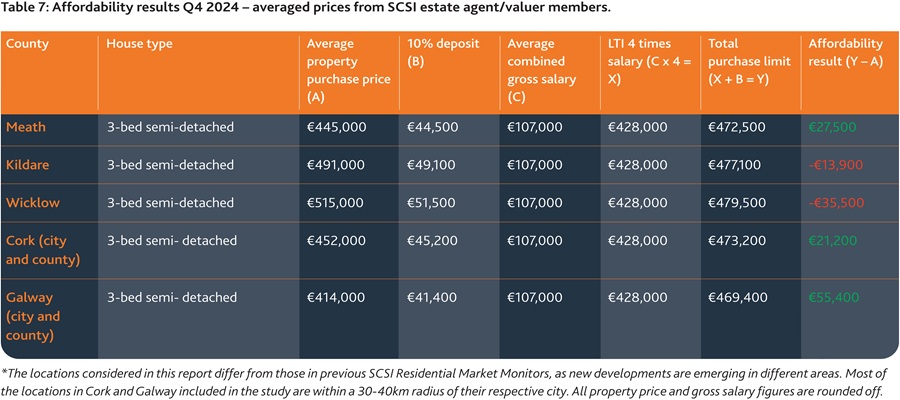
Fig 1 – Five scenarios. The purchase prices listed here are average purchase prices of 3 bed semi-detached homes based on new housing developments in the five counties analysed.
The analysis revealed that all house types across Meath, Cork, and Galway were affordable for this FTB couple while in Kildare and Wicklow the two-bed terraced and three-bed terraced houses were affordable. However, three-bed semi-detached houses remain unaffordable in both Kildare and Wicklow, with affordability gaps of €13,900 and €35,500, respectively.
Gerard O’Toole says analysis of trends across the five counties indicates that rising prices are making affordability more challenging.
“These trends suggest that the pace of property price growth is higher than income growth in several regions, especially Dublin’s commuter counties, creating pressures for prospective buyers. While the housing market remains active and resilient, there is a growing need to address these emerging affordability concerns. A balanced approach to increasing housing supply and reducing housing delivery costs could help to alleviate these pressures, fostering a more sustainable and inclusive housing market in the long term.”
“In addition, the introduction of higher densities, more broadly integrated housing mix which better reflects the needs of modern Irish society will be required if we are to address the housing supply crisis.”
“While Dublin is not included in the scenarios, based on house prices in the capital, it’s clear they are not affordable based on the income thresholds within the study. It’s also clear that unaffordability is restricting employment opportunities for many newly qualified professionals with many job vacancies remaining unfilled, particularly in education and health.”
“It’s important to note that couples on lower incomes will struggle to purchase a home within the private market with their only realistic prospect seeking to qualify for either social or affordable housing.
“In the long term the only way to moderate and gradually lower the affordability gap is by ramping up the supply of new homes. At the moment new housing supply is being curtailed by infrastructure deficits in water, electricity and sewerage. Zoned lands cannot be developed without these essential connections and considerable additional resources need to be applied by the state in this area as a matter of urgency.”
Rental Sector
The SCSI tracks members’ views on the activity of landlords placing their investment properties on the market for sale. Agents believe just over a third of sales instructions (34%) are from landlords looking to sell their investment, down from 40% six months ago.
Gerard O’Toole says the SCSI will continue to carefully monitor this trend.
“While agents have seen a noticeable fall off in the number of landlords leaving the market, the number is still rising. The three main reasons cited for their departure from the market continue to be, overly complex and restrictive rent legislation, net rental returns are too low, and some landlords coming out of negative equity. These factors collectively contribute to mounting pressure on landlords to divest their properties. The impact of Rent Pressure Zones (RPZ) and evolving tax policies are seen as being particularly significant.”
To see the full report, go to www.scsi.ie